




1. Introduction
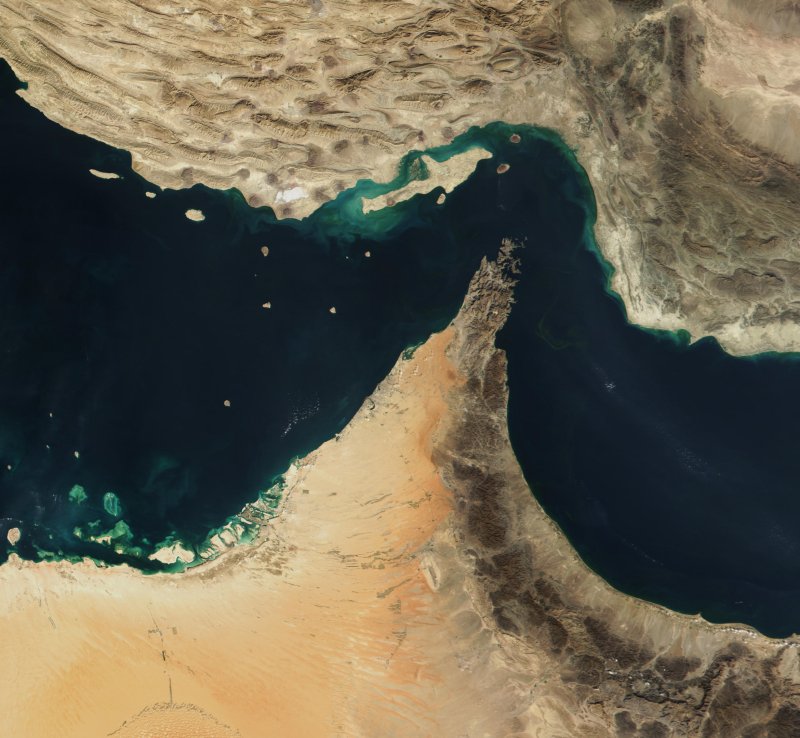
The Straits of Hormuz and Bab al-Mandab are critical maritime chokepoints for global economic and energy stability. The Strait of Hormuz connects the Persian Gulf to the Gulf of Oman and is the exclusive maritime route for the export of oil and gas from the region; approximately 20–25 % of global oil and LNG trade passes through it annually¹. Disruption of this chokepoint would cause immediate shocks to global energy prices, exerting pressure on importing nations and destabilizing financial markets.
Bab al-Mandab, in turn, connects the Red Sea with the Gulf of Aden and represents a critical node for transport towards the Suez Canal, through which the majority of intercontinental trade flows². Any interruption in this strait would affect cargo logistics and supply chains, particularly for energy and industrial commodities.
A dual closure scenario is considered an extreme event with global implications, including economic pressure, political destabilization, and increased military risk.
2. Russia: Structural Beneficiary and Strategic Opportunist
2.1. Theoretical Analysis of Opportunism
From the perspective of realist and geoeconomic theories, great powers capitalize on structural vulnerabilities in the international system³. Russia could benefit from rising energy prices in the event of a Hormuz disruption by:
•Strengthening its balance of payments and fiscal revenues,
•Positioning itself as an alternative supplier to European and Asian markets,
•Leveraging the crisis to increase diplomatic influence.
2.2. Practical Network of Influence and Regional Actors
Russia has built a heterogeneous network involving state, non-state, and extremist actors, contributing to the cumulative destabilization effect:
•State allies: Iran is a key actor capable of threatening navigation through Hormuz and mobilizing regional influence near Bab al-Mandab.
•Extremist and terrorist groups: Activities of the Houthis in Yemen have demonstrated the ability to disrupt maritime traffic through Bab al-Mandab using missile attacks and naval mines⁶. In the same region, Al-Shabaab in Somalia has targeted commercial vessels and shipping lines, increasing insurance costs and destabilizing logistics.
•Non-state actors with political or ideological agendas: Various groups use asymmetric actions to exert pressure on countries and international companies navigating the straits.
This network is not centrally commanded, but its cumulative effects disperse risk and amplify Russia’s influence without requiring direct military presence.
3. Serbia: Political Amplifier and Regional Destabilization Factor
Serbia lacks operational capacity over the straits but plays an informational and political role. Its historical and structural alignment with Russia is central to the network’s influence:
•Serbia supports pro-Russian narratives diplomatically and amplifies Western challenges in the Balkans⁴.
•In crisis scenarios, Serbia functions as a political amplifier, influencing regional opinion and creating space for Russia’s influence network to operate.
•This role provides the network with a propaganda-stabilizing dimension, enabling manipulation of international perceptions and increased pressure on energy-importing countries⁵.
4. Mechanisms of Network Influence and Extreme Dimension
The network operates across multiple dimensions:
•Economic: Disruption of Hormuz and Bab al-Mandab increases transportation, insurance, and global supply chain costs.
•Political and informational: Narrative control and disinformation create polarization and weaken multilateral institutions.
•Military and security: Extremist and terrorist organizations act as dispersed destabilizing forces, while international responses can restore freedom of navigation, albeit at substantial cost.
This combination of state and non-state actors, including extremist groups and terrorist organizations, forms a cumulative destabilizing system, reinforcing Russia’s position and that of its allies.
5. Implications and Limitations
A dual-crisis scenario would cause:
•Rising energy prices and inflationary pressure in importing economies,
•Global supply chain disruptions,
•Weakening of Western political and economic cohesion.
Limitations of the scenario include:
•Russia does not directly control decisions of non-state and terrorist actors,
•International responses may mitigate some effects,
•Alternative routes and strategic reserves may absorb immediate disruptions.
6. Analysis of Extremist Actions in Bab al-Mandab: Houthis, Al-Shabaab, and Other Actors
In an extreme scenario, non-state actors have a direct and measurable impact on global maritime traffic:
6.1. Houthis (Ansar Allah)
•Missile, drone, and naval mine attacks against commercial vessels in Bab al-Mandab⁶.
•Disruption of shipping services and diversion of routes to longer paths.
•Increased insurance costs and “war risk” premiums.
6.2. Al-Shabaab and Other Extremist Actors
•No direct attacks on vessels in Bab al-Mandab, but contribute to regional insecurity, raising operational costs and psychological pressure on maritime operators⁷.
6.3. Economic and Operational Effects
•Shipping diversions that extend transit time and increase costs³.
•Higher insurance premiums for high-risk areas.
•Impact on global energy and commodity markets, raising prices and economic pressure⁸.
The sponsorship and influence of Russia and its partners, such as Iran, on groups operating in Bab al-Mandab add a geopolitical dimension, making these actions not merely criminal or terrorist, but also politically and strategically significant in a broader international conflict.
7. Conclusion
In this extreme scenario, power is measured not only by territorial control but also by the ability to manipulate global systemic vulnerabilities. Russia functions as a structural beneficiary and indirect catalyst, Serbia as a regional political amplifier, and extremist actors as a non-linear force amplifying global pressure. This heterogeneous network illustrates the concept of distributed power, where destabilization outcomes depend on multiple interactions between state and non-state actors.
Footnotes:
¹ Wikipedia contributors. Strait of Hormuz. Wikipedia. https://en.wikipedia.org/wiki/Strait_of_Hormuz
² Wikipedia contributors. Bab el-Mandeb. Wikipedia. https://en.wikipedia.org/wiki/Bab-el-Mandeb
³ Mearsheimer, J. (2014). The Tragedy of Great Power Politics. W.W. Norton & Company.
⁴ Djordjevic, M. (2022). Serbia’s Foreign Policy in a Multipolar World. DOAJ. https://doaj.org/article/5255cc4bc61e45b9a6cc61fab49b625b
⁵ Pavlović, S. (2021). Balancing between East and West: Serbia’s Geopolitical Strategy. International Affairs, 101(6), 2300–2318. https://academic.oup.com/ia/article/101/6/2300/8315408
⁶ International Crisis Group. (2022). Yemen’s Maritime Chokepoints and the Houthi Threat. https://www.crisisgroup.org/middle-east-north-africa/gulf-and-arabian-peninsula/yemen/
⁷ UN Security Council. (2021). Threats posed by Al-Shabaab to Maritime Security in the Horn of Africa. https://www.un.org/securitycouncil
⁸ BBC Monitoring. (2023). Impact of Houthi Attacks on Global Shipping and Oil Prices. https://www.bbc.com/news/world-middle-east-64723148








Discussion about this post